The Ghibli AI fad is a symptom of the cancer eating us alive

A colleague thought it would be fun to send me a picture of myself at the Superweek Analytics Summit (which I happen to use as a social media profile picture) as one of these Ghibli-inspired AI renderings.
I get the appeal: it’s cute, endearing, and novel. It does make me look older and fattier but that’s ok, I own that part. Sadly, it highlights major problems with our use of AI and image generation as a whole — and here is why.
The original — credit: Superweek
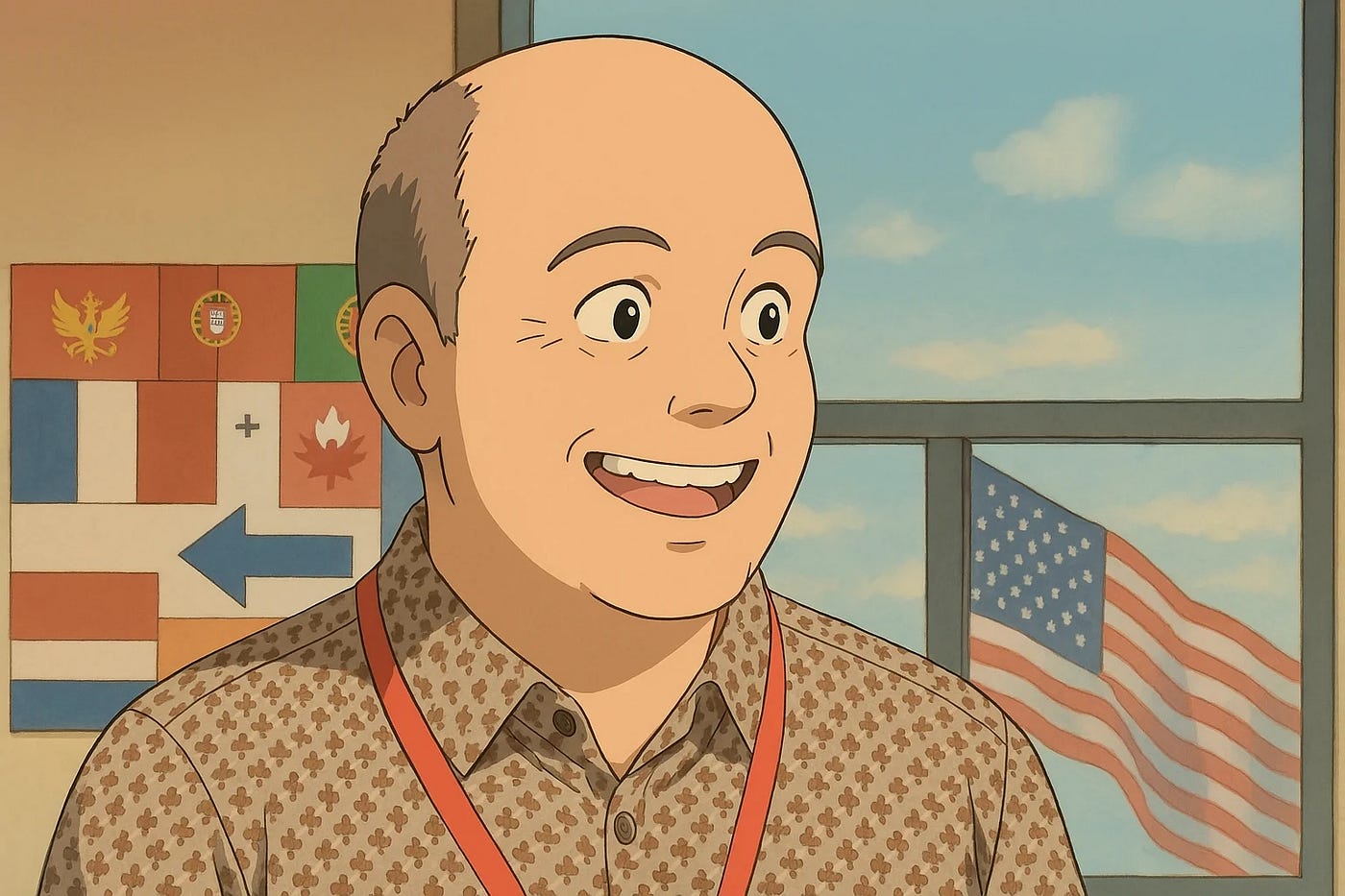 The Ghibli AI version — Source: OpenAI? Sora?
While at my former company (the one that bet the farm on AI and fired one third of its workforce), I had written an AI Ethics and Privacy Manifesto of sorts about… the ethics of AI as a marketing agency. For obvious reasons, it was never made public but I wanted to rewrite it from scratch here.
No AI unless you own the training data
That one should be straightforward. Whether the generative AI is linked to text, images, or audio, the media corpus used to train the AI must always be owned by the end customer.
Even if you buy or rent your media corpus, whoever is making the media available for a fee needs to guarantee that all media is owned by them, without any copyright or privacy issues — we’ll get to that last bit soon.
So when someone like Sam Altman of OpenAI says they can’t keep offering ChatGPT unless it can mindlessly absorb text from anywhere, you know something is broken. That the very concept of intellectual property has gone out the window — for people like Sam anyway, but he has issues when it applies to him so go figure.
Using copyrighted material can and will be used against you in an IP lawsuit. Always consider that when buying or renting your training corpus.
No AI unless the data is consented and PII-free
AI training data in all its forms (text, image, video, and audio) can contain personal or sensitive information. These formats can contain the following:
- Text: all sorts of identifiers, from email addresses, phone numbers, social security numbers, tax numbers, passwords, you name it
- Image & video: facial recognition, meta data from EXIF
- Audio: voice patterns
There are of course more potentially problematic data points in media used to train an AI but these are the usual suspects. Meaning the way a training corpus is acquired or built requires both consent from data subjects present in media but also a major data cleanup before that data is even remotely usable to generate seemingly new media.
How do I block AI from using my content?
Welcome to an expansive (and expensive) game of cat and mouse, where you have to constantly put up barriers to block AI agents from retrieving your media with a giant slurping sound.
For data prior to 2025, it’s probably too late and it’s already been scraped off the interwebz. For now, your best bets are to:
- block IP addresses,
- protect your content with user accounts,
- protect your content with a captcha
The IP address blocking solution is the one that requires the most work, as it is a constantly evolving field. Thankfully, people such as Fabrizio Cafolla have put up repositories of IP addresses belonging to AI services.
Using this list, add blocking rules to your website, to the effect of:
Order Allow,Deny
Deny from 66.249.74.0/24
Allow from all
The above is for Apache-style .htaccess protection but the method will be similar for other web servers.
Educate Internet users early
There is a world of difference between fair use when creating and sharing a meme, and industrializing the process of generating new content based on an entire collection of media.
Creating your own Grumpy Cat meme is not the same as OpenAI absorbing the entire works of Ghibli Studio to generate avatars or visuals for users that pay for the service.
Whenever the school systems start educating kids on how to use digital devices (computers, phones, tablets, or whichever we will come up with in the next few years), there needs to be specific elements in the curriculum that emphasize the rules around fair use, intellectual property and privacy.
In conclusion
The Ghibli Genie is unfortunately out of the bottle and the Studio needs to mount major legal action. If they don’t, they essentially concede defeat to OpenAI (and whichever other AI company that plundered their work) and risk to see their IP spirited away (see what I did there? that’s fair use).
Will the risk of a lawsuit be enough for this behavior to stop?
What about you and your company? How do you handle generative AI? What sort of limitations do you set for fair use and privacy? How do you know what kind of training data was used?
Do you even care how the sausage is made? Be honest and let me know via the contact form.