On Google Search, AI, profanity, and mental health
In a recent piece, I covered how AI is not “intelligent” and not what’s it’s cracked up to be. But this time, I want to cover something that affects us all: searches.
Are you tired of annoying/hallucinated AI suggestions in search? Irrelevant search results? Annoying commercial widgets right off the bat?
(I’m looking at you, Google 🤨 )
Try the following tip: add profanity to your search queries!
More often than not, profanity in a search “prompt” tells AI to disregard the query so it falls back to “vanilla” search results.
This behavior brings valuable benefits:
- Benefit #1: It removes the AI widgets and suggestions you are not going to read if you’re equipped with critical thinking
- Benefit #2: You actually get relevant results
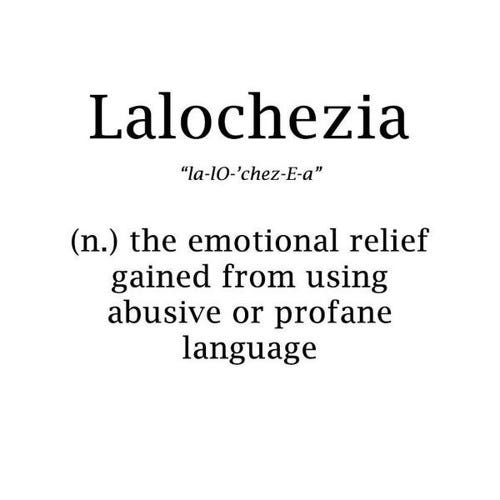
- Benefit #3: Let it all out, it’s good for the soul. There is an actual term for this feeling: lalochezia
It’s a thing that happens to me often daily
Try this at home
But don’t take it from me: you too can drop F-bombs in your searches!
Go to Google, type in these two queries and watch as you get different results:
- What’s a good name suggestion for my dog?
- What’s a good fucking name suggestion for my dog?
(uncensored for your copy/pasting convenience)
I will let the photos below speak for themselves:
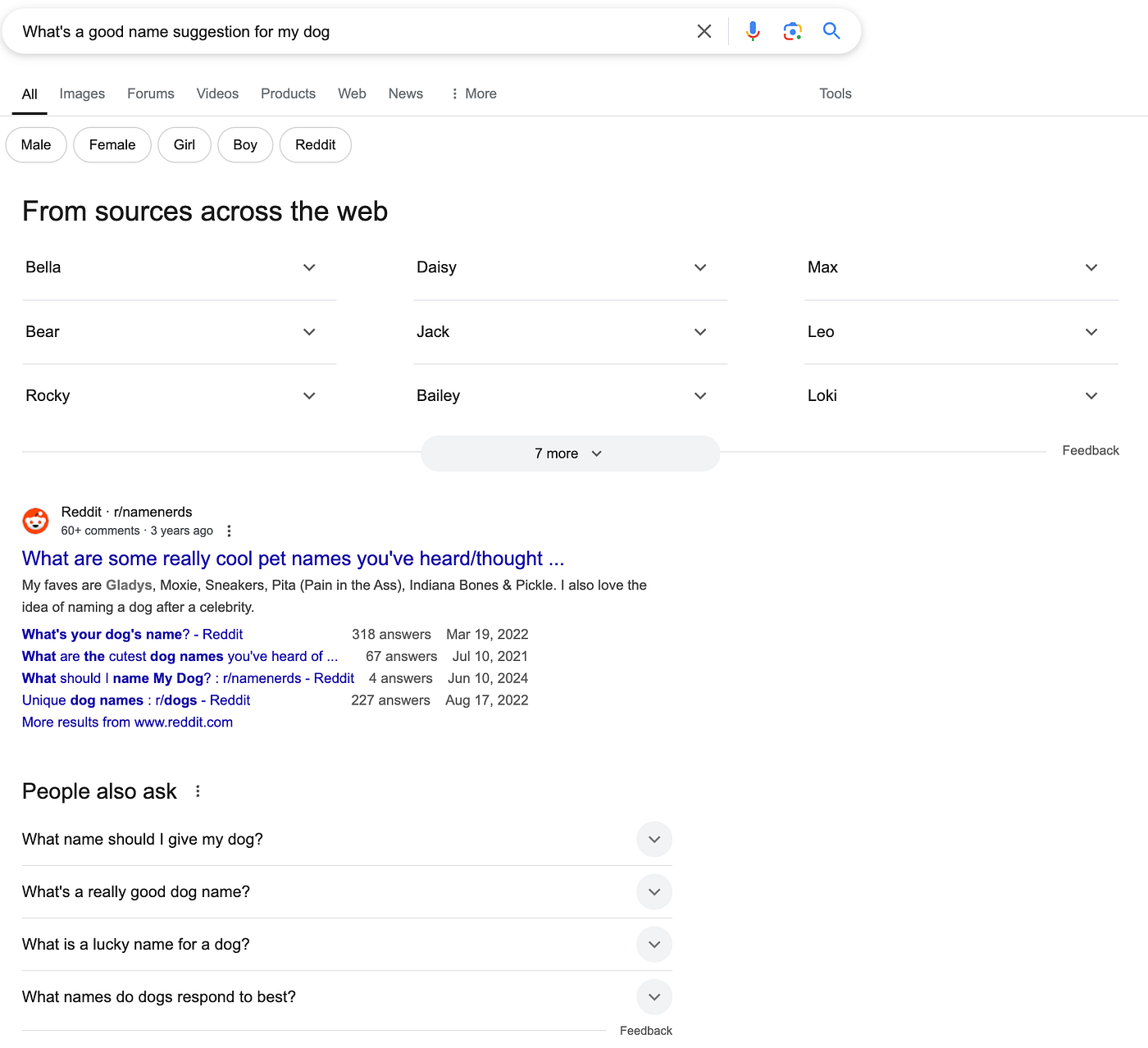
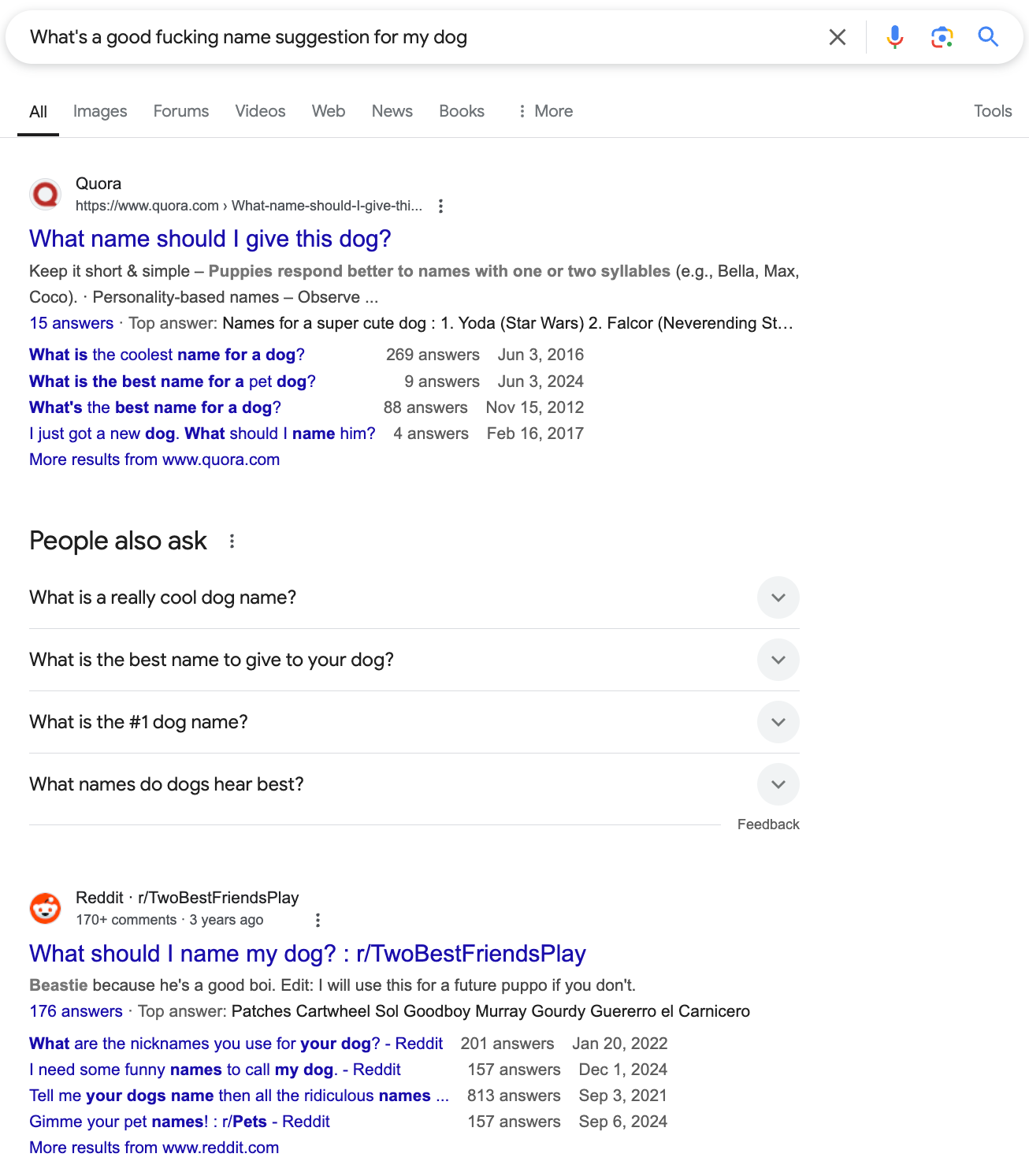 Search result differences based on whether you use profanity — credit: Google, Julien Coquet
While searching for dog names is not such a big deal, the same line of thinking is valid for consumers.
Let’s say I want to buy a car online. I know, I know, I’m asking to be clobbered by all sorts of ads or promotional devices. Let’s dive in anyway with the same type of search and its variant:
- I need to buy a car
- I need to buy a fucking car
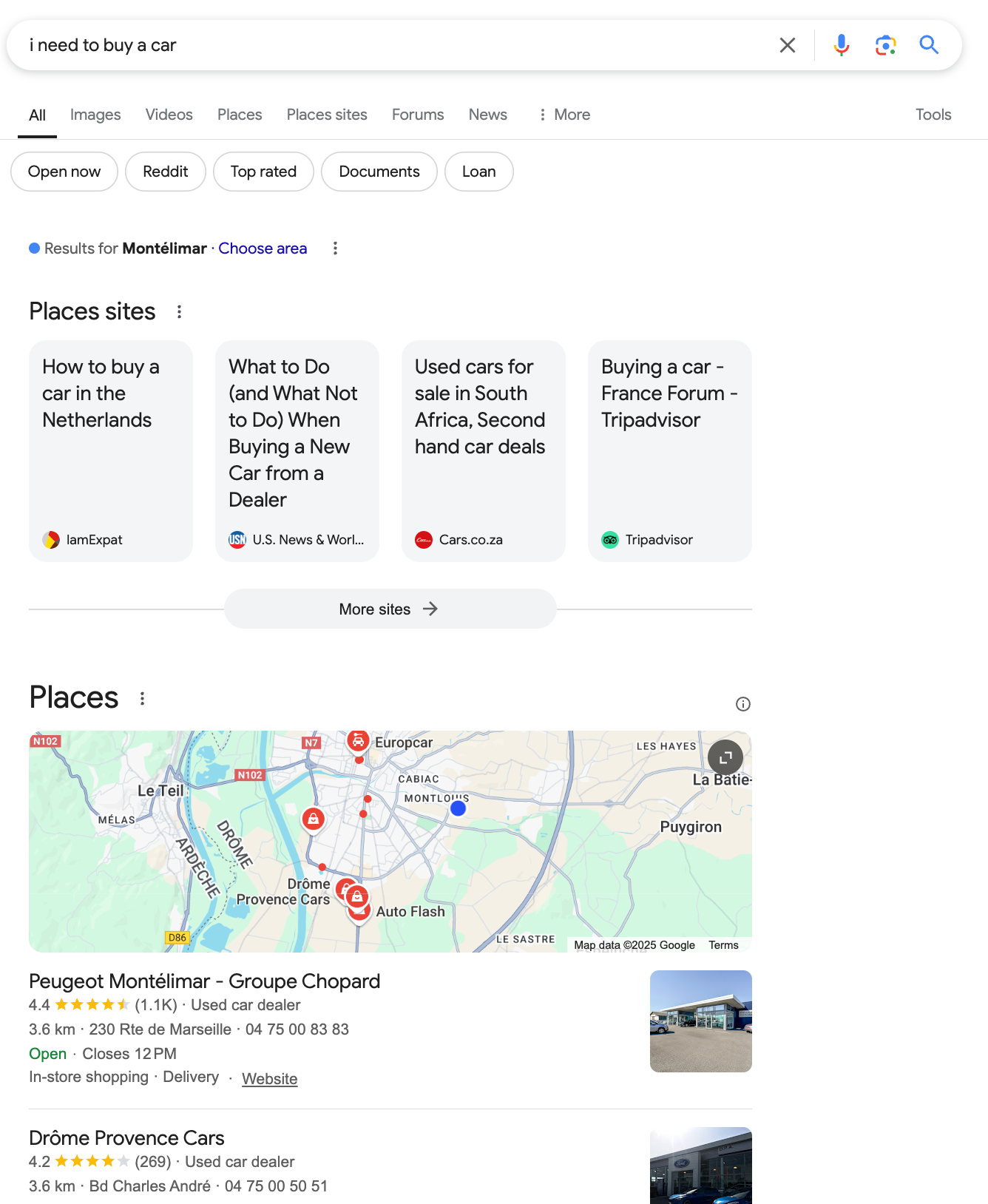
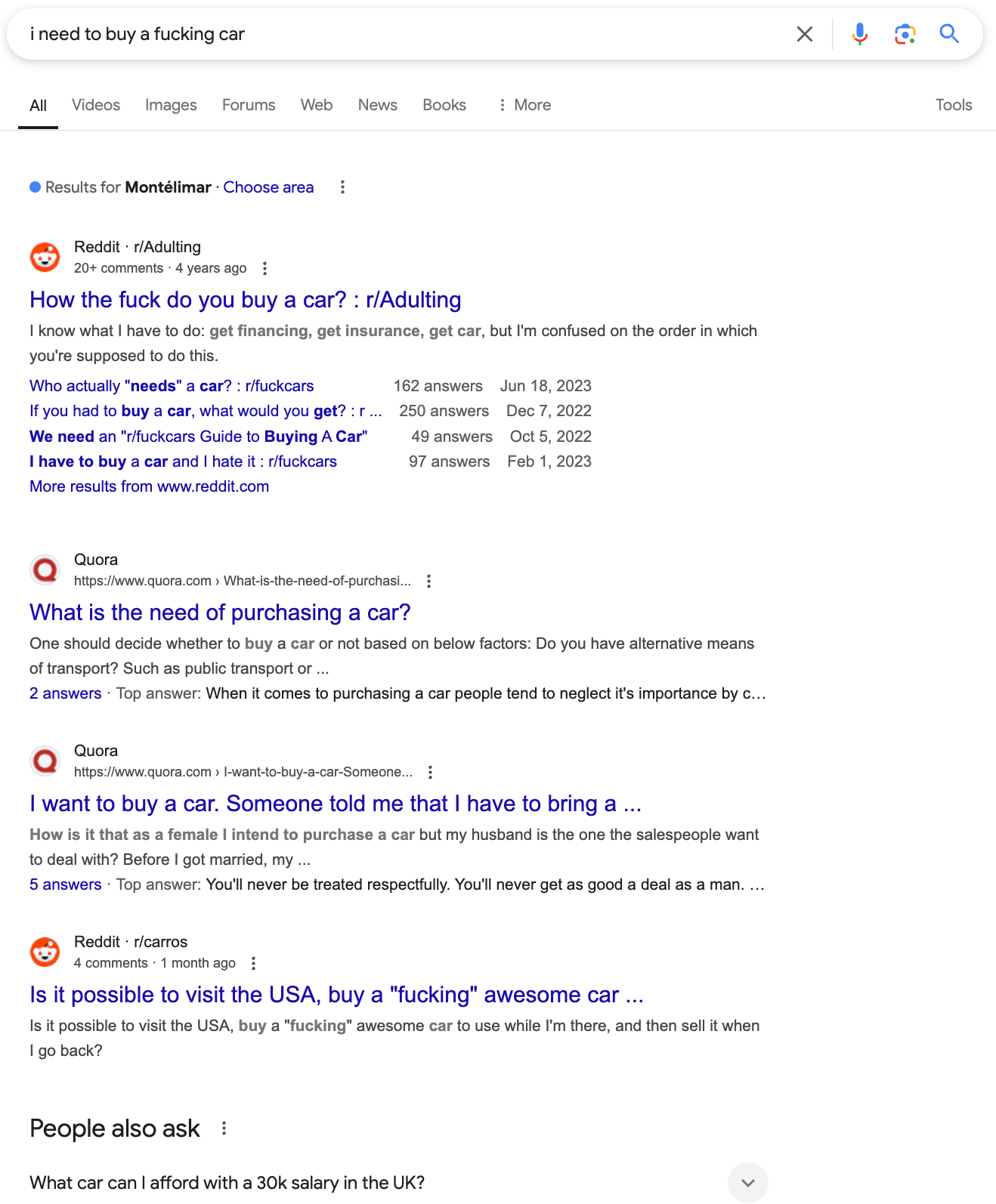 Search result differences based on whether you use profanity — credit: Google, Julien Coquet
As you can see from the images above, in the second search (in which profanity is used) it boils down to the “why” and “how”, but not the “what”. Arguably the AI-assisted search does not help me beyond the “where”, with broadly local results. At no point do I see a vehicle in search results for either query. Sad, but I feel better with the second result.
The “I make you think about stuff” part
What does this mean for us end users and consumers?
Should we be expected to have “AI in everything”? Hint: this is not a valid remedy for what ails tech vendors or ad agencies who are betting the farm on AI to stay relevant.
Should we be more polite towards the machine? The machine does not have feelings. At best, the Large Language Model (LLM) can predict the tone of the output based on the tone in the prompt, but nothing more.
Shouldn’t AI learn from these prompts and adjust? In the case of Google with Gemini or OpenAI with ChatGPT, couldn’t the “AI” be more proactive and ask for context so that it doesn’t just regurgitate ads or promotional material? Be more “conversational”, if possible?
What are your thoughts on this whole situation? Do you too drop F-bombs in searches, chats with customer service, e-mails? Everywhere? Let me know via the contact form.
I wish you a good lalochezia-enabled day! 🥰